News&Events
News
Space Exploration Session of the 2026 International Conference on the Cooperation and Integration of Industry, Education, Research and Application
The 2026 International Conference on the Cooperation and Integration of Industry, Education, Research and Application (Jilin, Heilongjiang, Liaoning Provinces and the Inner Mongolia Autonomous Region) — Intelligent Equipment Empowering Space Exploration and Utilization Session and the HIT Frontier Forum for Engineering Master's and Doctoral Students — was held in Harbin. Jointly initiated by Academician Deng Zongquan and Professor Jiang Shengyuan of HIT, the session was hosted by the Center for School Development and Planning, Ministry of Education and HIT, co-organized by the School of Mechatronics Engineering at HIT, the State Key Laboratory of Robotics and Systems, the State Key Laboratory of Aerospace Mechanism and Harbin University of Commerce. Nearly hundred universities, research institutes and industry companies from around the world sent representatives to the forum. Yang Zongyi, Deputy Director of HIT's International Cooperation Division and Director of the International Program Management Center; Pan Yunlu, Cheng jian, Deputy Dean of the School of Mechatronics Engineering; Evgeny Nikolaev, Academician of the Russian Academy of Sciences; Gao Yang, Professor of The Hong Kong University of Science and Technology; and Maksim Zaitcev, Researcher of the Space Research Institute of the Russian Academy of Sciences. Professor Jiang Shengyuan of the School of Mechatronics Engineering chaired the opening ceremony.
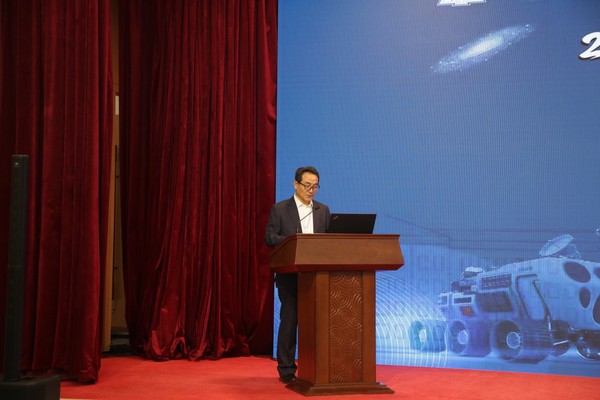
Professor Jiang Shengyuan chaired the opening ceremony
Speaking on behalf of HIT's International Cooperation Division, Yang Zongyi greeted the guests who had travelled to Harbin for the early-autumn gathering. Deep space exploration is a global endeavor, he said. Planetary science, space robotics and in-situ resource development all call for international coordination, and major undertakings such as the International Lunar Research Station require an open and inclusive cooperation network. He noted that the conference had set up an international cooperation session that would feature the unveiling of a joint laboratory, research workshops and the signing of cooperation agreements, as well as visits to research platforms. We hope this conference will help deepen long-standing partnerships, advance joint research, joint talent cultivation and mutual benefit, and bring about more concrete cooperation, he said.
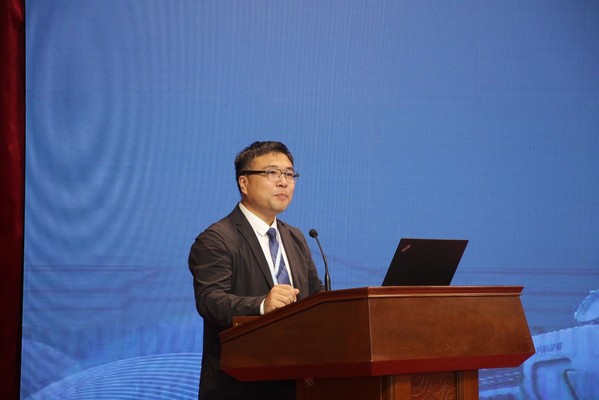
Yang Zongyi delivered remarks
The forum focused on frontier fields such as the study of lunar regolith samples and the application of simulants, and the in-situ prospecting and in-situ utilization of extraterrestrial resources, and featured 15 keynote presentations. It brought together renowned experts from China and overseas in deep space exploration, geotechnical engineering, intelligent equipment and resource development to discuss key scientific and engineering questions, including the preparation of lunar regolith simulants, precise detection of extraterrestrial resources, in-situ extraction and analysis, and the development of deep space sampling equipment. A number of leading Chinese and international experts were invited to deliver keynote presentations. Xue Changbin, the National Space Science Center, Chinese Academy of Sciences; Evgeny Nikolaev, Academician of the Russian Academy of Sciences; Gao Yang, the Hong Kong University of Science and Technology; Maksim Zaitcev, the Space Research Institute of the Russian Academy of Sciences; Zhang Xiaoping, Macau University of Science and Technology; Olga Turchinskaia, the Vernadsky Institute of Geochemistry and Analytical Chemistry of the Russian Academy of Sciences; Li Yang, the Institute of Geochemistry, Chinese Academy of Sciences; Wang Chu, the China Academy of Space Technology; Zou Meng, Jilin University; Tang Junyue, Harbin Institute of Technology; Yue Zongyu, the Institute of Geology and Geophysics, Chinese Academy of Sciences; Li Yuqiong, the Institute of Mechanics, Chinese Academy of Sciences; Wu Wenping, Wuhan University; and Li Lifang, the Institute of Space Environment and Material Science at HIT. Experts shared insights into frontline topics, key technical challenges and latest innovations from multiple perspectives based on their research areas. In addition, 27 international scholars from countries including Uzbekistan, Namibia and Armenia took part in the forum.
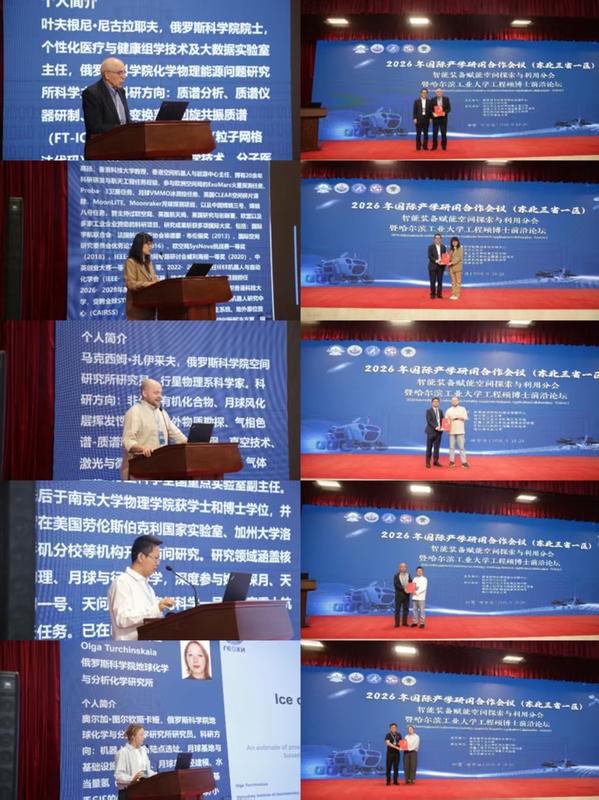
With lunar and deep space exploration advancing rapidly, the forum was designed to build a high-level academic exchange platform, encourage the exchange of ideas across different research directions, and promote interdisciplinary and cross-sector collaborative innovation. By sharing the latest research results and discussing development trends, it sought to build consensus, foster the flow of academic ideas and support the translation of basic research and engineering outcomes, providing strong support for talent development and joint research in China's deep space exploration and extraterrestrial resource development.
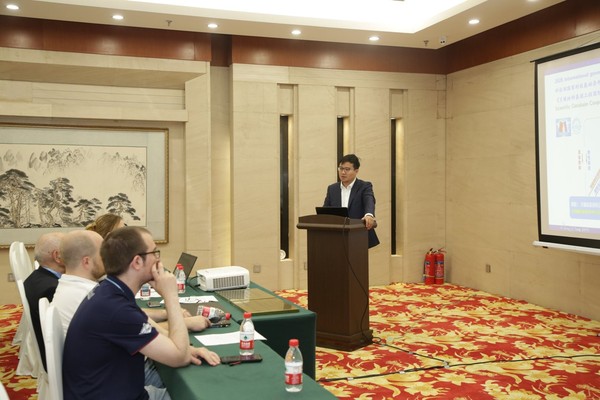
Workshop on joint international research projects
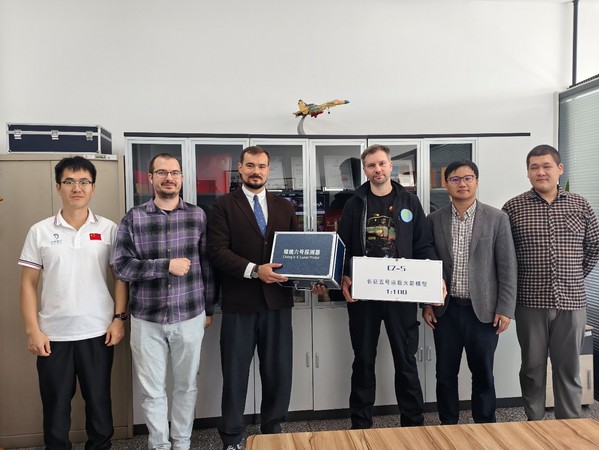
Cooperation talks with the Vice-Rector of Murmansk Arctic University
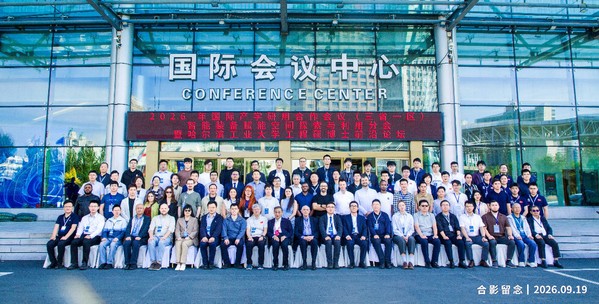
Group photo at the 2026 International Conference on the Cooperation and Integration of Industry, Education, Research and Application